
Building a Trusted Real Estate Brand
Why Trust is the Only Real Estate Currency in 2026
The era of buying leads is over. Learn the blueprint for building a brand that wins on storytelling, not just algorithms.

If you are still waiting for your phone to ring because you boosted a post on Facebook, you are already falling behind.
The tools you relied on for the last ten years are not just losing power; they are actively destroying your profit margins. We are entering an era where the cost of buying a lead often exceeds the value of the commission itself.
This is not a temporary market dip. It is a fundamental shift in how people choose who to trust with their most valuable asset.
The only way to survive is by building a trusted real estate brand for 2026 that lives in the hearts of your neighbors before they ever think of selling.
You must move from the noise of the auction to the quiet authority of the narrative.
The Global Shift: Why the Performance Marketing Playbook is Failing

The Crisis of Metrics and the 60% Surge in Acquisition Costs
For two decades, the industry has been obsessed with the measurable. Performance marketing, the act of putting money into digital channels for immediate, trackable returns, became the standard operating system for growth.
But as we approach 2026, this machine is breaking. We are seeing a structural collapse of the digital arbitrage model.
Data shows that Customer Acquisition Costs have climbed by sixty percent in just five years. This is not just inflation; it is a sign that the old way of buying growth is over.
In the software service sector, which often serves as a signal for real estate, the efficiency gap is now a disaster. Inefficient firms are spending R51 to get just R17 of new annual recurring revenue.
This inversion of economics means that you cannot spend your way to success anymore. The digital world has reached a point of peak content where consumers are bombarded by thousands of ads every day.
This has created algorithmic fatigue, where the human brain simply ignores transactional interruptions to protect itself.
The platforms themselves have undergone what many call enshittification (platform decay). User experience is being sacrificed to squeeze in more ad inventory, making audiences hostile to direct sales pitches.
Additionally, the end of the third-party cookie has blinded the precision targeting agents once loved. You can no longer find a homeowner in Brackenfell with sniper-like accuracy using outside data.
The remaining spray-and-pray methods are too expensive for most independent brands to sustain.
The Nike Lesson: When the Click Kills the Connection
We can see this shift most clearly in the strategic correction made by Nike in late 2024. After years of focusing almost entirely on digital performance marketing and direct sales, the global giant found that its brand strength was rotting from the inside.
They realized that by focusing on the click, they had lost the feeling. They announced a massive move of resources away from performance marketing and back toward brand storytelling. They understood that you cannot optimize your way to a relationship.
For you, the lesson is clear. When you spend all your time on the technical aspects of an ad, you forget the human at the other end.
Performance marketing captures the demand that already exists, but it does nothing to create new demand. If you only focus on the transaction, you become a commodity.
Commodities are always forced to compete on price, which in your world means cutting your commission until there is nothing left to cut.
By choosing performance marketing vs brand story, you are choosing between a short-term win and a long-term future. A brand built on story creates an emotional moat.
It allows you to defend your value even when the market is volatile. Nike had to relearn that people do not buy shoes because of a tracking pixel; they buy them because of how the brand makes them feel.
Your clients do not hire you because of your Facebook reach; they hire you because they believe you will protect their legacy.
Building Mental Availability in Real Estate
The ultimate goal of this new era is to build mental availability in real estate. This means being the first name that comes to mind long before a homeowner is actually ready to list their property.
Most agents fight over the people who are searching for an agent right now. This is a crowded, expensive space.
True authority is built when you win the client before the search even begins. This is what we call pre-suasion, and it bypasses the competitive bid process entirely.
Mental availability is the result of consistent, narrative-driven presence. While performance marketing focuses on market availability, brand resonance focuses on the brain.
When a homeowner thinks about selling their house next year, the agent with the strongest story in their memory is the one who gets the call.
You want to be a safe harbor in a time of uncertainty. As the global economy remains volatile, consumers naturally retreat to brands that project stability and clear values.
Investing in your narrative creates price inelasticity. A generic agent is a commodity, but a trusted advisor is a value provider. High-quality stories about protection, care, and maximizing outcomes justify a full commission.
In an environment where every Rand counts, being the most trusted option is better than being the cheapest option. You are not just selling a service; you are providing a feeling of security that no algorithm can provide.
Local Realities: Navigating the Northern Suburbs Trust Deficit
Beyond the Boerewors Curtain: The Brackenfell Economic Powerhouse
To win in 2026, you must throw away the old stereotypes of the Northern Suburbs. The so-called Boerewors Curtain has dissolved. What was once a cultural divide is now a massive economic corridor.
Brackenfell, which started in 1913 as a small railway siding, has become a residential powerhouse. The area offers a perfect balance of value and access, making it a primary destination for the new South African middle class.
The local market has shown incredible strength, with median prices in some areas doubling over the last decade. But the most important change is the demographic shift.
Data indicates that forty-four percent of recent buyers in the area are under the age of thirty-five. These young professionals are diverse, digitally native, and have very different expectations from their parents.
They do not want a generic agent with a loud tie; they want someone who understands their lifestyle and their need for connectivity and convenience.
Despite these northern suburbs Cape Town property market insights, most local marketing is stuck in the past. Agencies are still relying on a list and wait model, putting identical photos on property portals and hoping for the best.
This has created a sea of sameness where every listing looks and sounds the same. There is no narrative depth. When every agent says they are the best, the claim becomes meaningless noise.
Eliminating Commission Breath to Restore Seller Trust
The Northern Suburbs are currently facing a trust deficit. High interest rates have put pressure on agents to close deals at any cost, leading to a rise in what we call commission breath.
This is the palpable sense of desperation that a seller feels when an agent cares more about their quota than the client’s well-being.
It is predatory energy, and it is driving clients away. To succeed, you must learn how to avoid commission breath by prioritizing the person over the deal.
This problem is made worse by the race to the bottom on fees. Many agents are cutting their commissions to two or three percent just to secure a mandate.
This is a trap. A lower commission means the agent lacks the funds to actually market the home correctly. The seller might save twenty thousand Rand on the fee, but they often lose a hundred thousand Rand on the final sale price because the home was not positioned correctly.
A brand story strategy solves this by explaining the value of the fee. It moves the conversation away from the cost and toward the outcome.
When you act with fiduciary care, you prove that you are an advocate, not just a salesperson. This shift in positioning is the only way to heal the trust deficit and build a business that lasts beyond the current market cycle.
High-Touch Empathy: Serving the Senior Downsizing Demographic
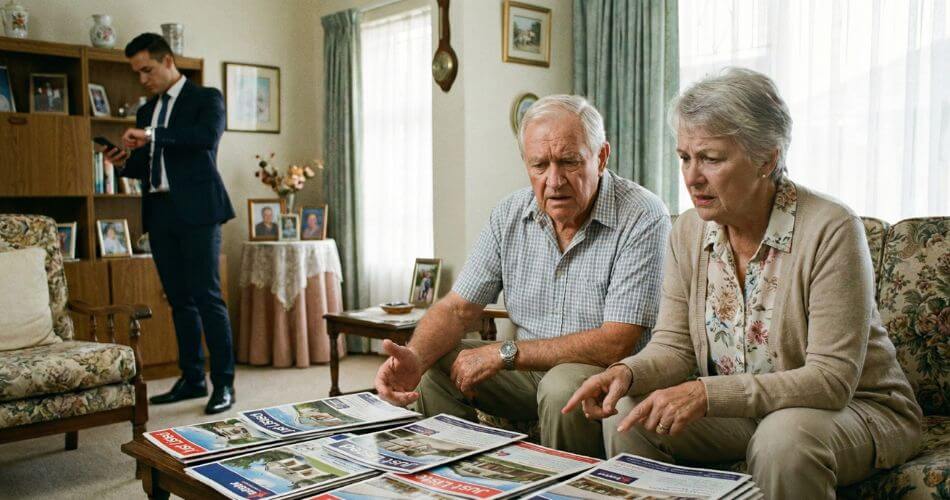
One of the most underserved groups in the North is the senior population. Brackenfell and its neighbors have a large number of retirees who are looking to downsize.
These clients are not just moving house; they are navigating a deep emotional transition. They are leaving family homes filled with decades of memories.
For them, a performance-driven agent who is only interested in speed and volume is a nightmare.
This is where real estate marketing for senior homeowners must be different. This demographic requires patience and high-touch guidance.
They need someone who understands the difference between life rights and sectional titles, and who can explain it without pressure.
Stories of agents ghosting seniors once the deposit is paid have hurt the industry’s reputation. You can differentiate yourself by being the one who stays, the one who listens, and the one who guides.
Empathy is your greatest competitive advantage here. By focusing on the emotional turbulence of downsizing, you position yourself as a guide rather than a broker.
You are helping them protect their wealth and their legacy. This requires a level of humanity that an algorithm cannot replicate.
If you can win the trust of the seniors, you win the trust of the families who will eventually inherit that wealth.
The Strategy: Transitioning from Transactions to Transformation

The Sage Positioning: Using Education to Build an Authority Moat
In a world drowning in AI-generated noise, the sage is king. People are looking for experts they can trust to filter out the nonsense. You can build an authority moat by becoming a teacher.
If you provide high-quality education without immediately asking for a sale, you build a massive amount of brand equity. This is the opposite of the old way of marketing, where every piece of content was a demand for attention.
You should aim to provide the information that people actually need. Young buyers are confused about transfer duties and bond registrations. Seniors are worried about the legalities of retirement villages.
By creating a property academy or a series of educational guides, you become the primary source of truth in your area. This positions you as a fiduciary who is looking out for the client’s interests.
Using the inversion mental model is a great way to do this. Instead of telling people how to sell their house, write about the five ways to ruin a home sale.
This kind of counterintuitive advice grabs attention because it is helpful and honest. It shows that you have seen the pitfalls and know how to avoid them.
Education is the ultimate marketing tool because it provides value before you ever ask for anything in return.
Authentic Heritage: Leveraging Personal Narratives and Stoep Stories
Your brand needs a soul. People do not connect with logos; they connect with other people. This is why personal narrative is so important. Look at the example of local experts like Andre Swart.
His background in entertainment, sharing stages with legends like Tolla van der Merwe, is not a distraction from his real estate work. It is the heart of it. It shows he knows how to read an audience and connect with people on an emotional level.
You should use your own unique history to ground your brand. Whether you are a long-term resident of the North or have a specific professional background, use those details to humanize yourself.
This is the concept of stoep stories. It is about celebrating the local culture of the Northern Suburbs, which is unpretentious, family-oriented, and resilient. This cultural resonance is what creates a bond between you and your community.
Authenticity is the only defense against the rise of generic AI content. An AI can write a listing description, but it cannot tell a story about why a specific street in Sonkring is perfect for Friday evening bike rides.
It cannot talk about the local history of the railway siding. By leaning into your heritage and the heritage of the area, you create a brand that feels real in a world that feels increasingly fake.
Community Immersion: The Agent as Chief Community Officer
Marketing in 2026 is about being physically present and hyper-local. You should think of yourself as the chief community officer of your suburb.
This means moving your budget away from distant billboards and putting it into local assets.
Support the local school rugby teams, fund the park clean-ups, and align yourself with the business improvement districts and neighborhood watches.
Safety is the primary currency of the Western Cape. While most agents just list electric fencing as a feature, a resonant brand celebrates community cohesion.
Tell the story of a suburb where neighbors look out for each other. When you are seen as a custodian of the neighborhood, you are no longer just an agent looking for a commission.
You are a stakeholder in the success of the community.
This level of immersion builds a reputation that no algorithm can touch. If you are the person who is always there, helping and contributing, you do not need to spend as much on lead generation.
Your presence is your marketing. This is how you build a business that is insulated from market cycles and platform changes.
The 2026 Roadmap: Architecting a Resonance-First Brand
Phase 1: The Content Audit – From Portal Listings to Home Biographies
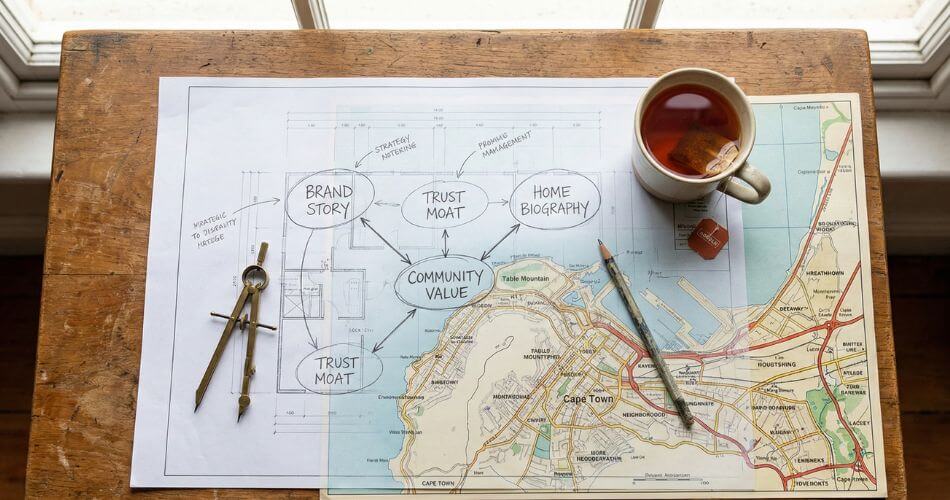
The first step in your transition is a complete audit of your current content. You must stop sending out generic flyers and portal listings that lack a narrative. Every home has a story, and it is your job to tell it.
Move away from just listing the number of bedrooms and start writing home biographies. Describe the lifestyle that the home enables.
Instead of a three-bedroom in Vredekloof, talk about the Saturday braai headquarters. Describe how the kids can walk to school while the parents prep the fire. Use professional video and staging to bring these stories to life.
While you can use tools to help you draft these descriptions, you must edit them to make certain the voice is warm, local, and authoritative.
Phase 2: The Fiduciary Engine – Giving Value Before Asking for the Sale
Once your content is humanized, you must build your fiduciary engine. This is a system for giving away value.
Start a newsletter that focuses on local news, safety stats, and school zone updates rather than just your new listings. Provide annual equity updates to your past clients without any pressure for them to sell.
This builds long-term mental availability. When a client receives a helpful update on their home value every year, they will never think of calling anyone else when the time finally comes to move.
You are proving that you care about their wealth even when there is no immediate transaction on the table. This is how you move from being a salesperson to being a life-long advisor.
The Long Game: Building a Reputation Moat Against the Algorithm
The final phase of your roadmap is to settle in for the long game. Building a brand based on resonance takes time, but the rewards are permanent. You are building a reputation moat that protects you from everything.
Google can change its ad rates, and Facebook can hide your posts, but they cannot tax the trust you have built with your neighbors.
In a downturn, people look for quality and stability. By 2026, the winners in the Northern Suburbs will be the ones who stopped chasing clicks and started building relationships.
They will be the ones who understand that storytelling is a hard economic necessity. By focusing on building a trusted real estate brand for 2026, you are not just surviving the future; you are owning it.
About the Author
Andre Swart is a respected leader in Brackenfell real estate with over 20 years of results-driven experience. Through his platform, “Andre Swart Inspires,” he moves beyond simple property sales to share the proven mindset, strategies, and habits that build lasting success.
Grounded in integrity, Andre’s mission is to mentor the next generation of top agents and provide homeowners with the trusted guidance they deserve.