
How to Sell My House in Brackenfell: Q4 2026 Strategy
To sell your house in Brackenfell in late 2026, you need accurate pricing for the current interest rate environment, a strategy built for commuter-conscious buyers, and a specialist listing agent who defends your equity.
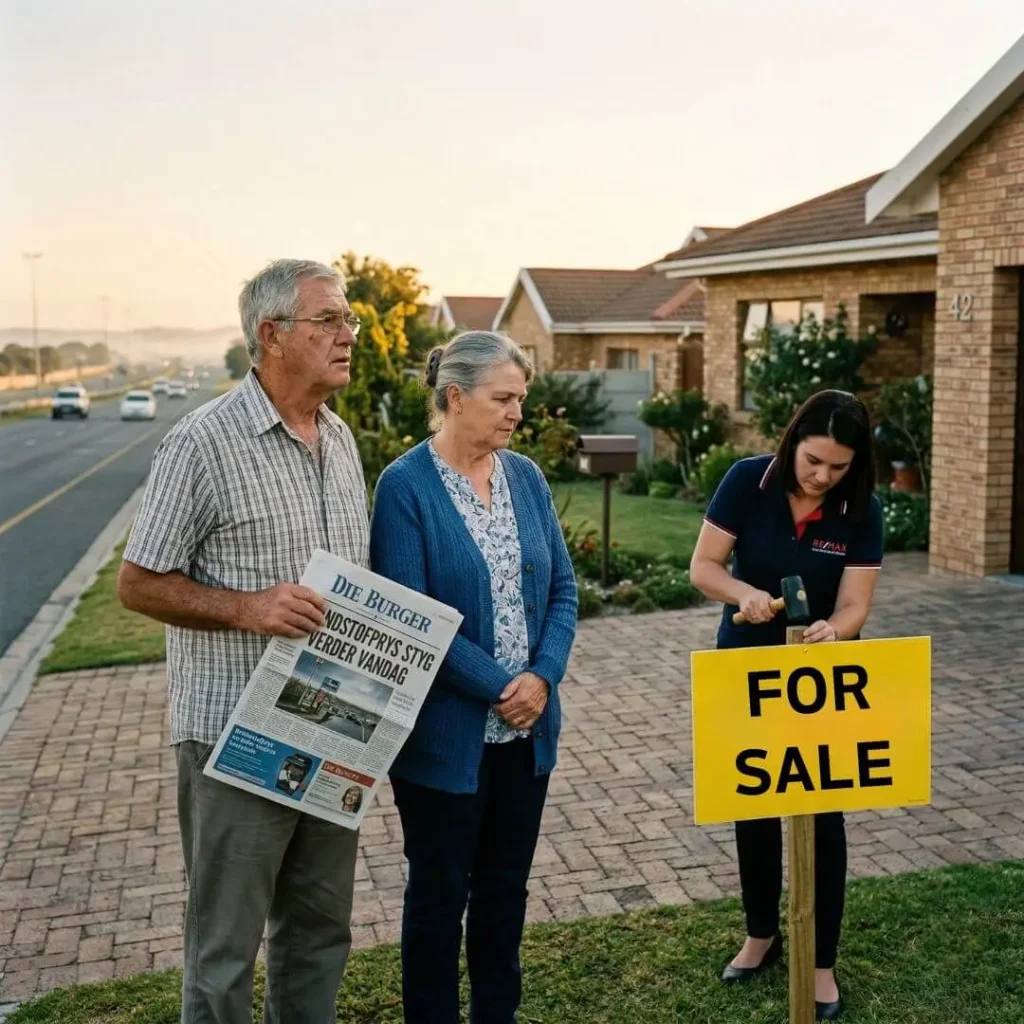
It is early morning in the Northern Suburbs. Over coffee, headlines about rising fuel costs and interest rates are impossible to ignore.
For a homeowner over fifty-five, these are not distant political events, they are direct threats to the wealth tied up in your bricks and mortar.
You may be asking how to sell my house in Brackenfell before the economic tide turns further against you. The window to cash out on your terms is narrowing by the month.
This guide is your practical manual for late 2026. We walk through pricing accurately for the current interest rate environment, clearing Cape Town’s compliance requirements, and protecting your retirement equity as you extract your capital safely.
To sell your house in Brackenfell in late 2026, you need accurate pricing for the current interest rate environment, a strategy built for commuter-conscious buyers, and a specialist listing agent who defends your equity.
Navigating the Brackenfell Property Market in Late 2026

impact of 2026 interest rates on Brackenfell property
Making a confident decision requires current numbers, not last quarter’s headlines. Here is exactly what is shaping buyer affordability in Brackenfell right now.
Interest Rates
Prime lending rate: 10.50 percent (repo 7.00 percent), holding since the May 2026 hike, the first increase since 2023.
Buyer impact: Bank affordability checks remain stricter than early 2026, narrowing the pool of qualified buyers.
Your strategy: Price accurately from day one. An inflated listing filters out exactly the buyers this rate environment has already reduced.
Fuel and Commuter Costs
Petrol and diesel rose again from 2 September 2026, driven by rising global oil prices amid continued Strait of Hormuz disruption. Coastal 95 petrol now sits at R26.05 per litre, diesel at R28.79.
Buyer impact: Buyers increasingly weigh commute cost, prioritizing proximity to schools and the N1.
Your strategy: Highlight proximity to Bastion Primary, Brackenfell High, and N1 access in every listing and campaign.
Rising Cost of Living
Compliance and repair costs are climbing alongside everyday living expenses.
Buyer impact: Buyers favor move-in-ready homes to avoid unbudgeted repair bills after the sale.
Your strategy: Secure SSEG and Schedule 4 compliance certificates before listing, not during negotiation.
The Brackenfell Market Reality: Pricing for a Fast Sale
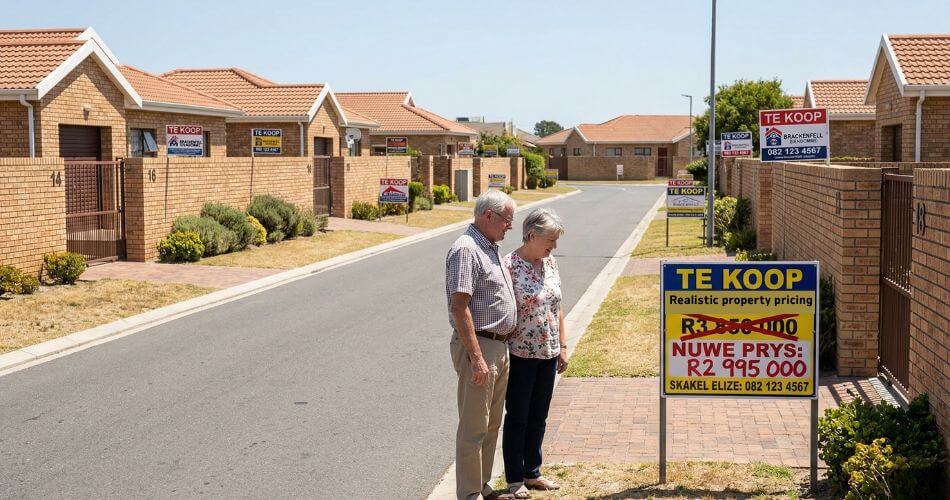
Who is buying houses in Brackenfell in 2026?
The primary buyers of houses in Brackenfell in 2026 are dual-income families and upgrading professionals aged between 36 and 49 who rely heavily on bank financing.
Lightstone Property data confirms that this specific demographic accounts for 40.36 percent of recent purchases in the area. Standard freehold properties make up 64.74 percent of the local housing stock.
Source: Lightstone Property, Brackenfell Town Report, 13 August 2026.
Families are drawn to the suburb for its solid environment, excellent schools, and straightforward access to the N1 highway. Because these buyers are commuting daily, they are highly sensitive to rising transport costs.
They do not have massive cash reserves and are completely dependent on the banks to fund their property purchases.
This demographic data is essential context when planning for downsizing and protecting retirement equity in Brackenfell.
You are selling a large asset to a consumer base facing immense and growing financial pressure, and pricing your home for their specific budget constraints is a strict necessity.
What is the delusional price gap in the Northern Suburbs?
The delusional price gap in the Northern Suburbs is the difference between what hopeful sellers list at and what the deeds office actually records.
Over the twelve months to August 2026, Brackenfell’s average recorded selling price across all property types was R1.64 million.
Source: Lightstone Property, Brackenfell Town Report, 13 August 2026.
Many older sellers have lived in their homes for decades and have strong emotional attachments to the property. They enter the market expecting buyers to pay a premium.
They base these expectations on historical growth patterns that no longer exist in the current economy. Sellers often list their homes at the absolute ceiling of the market, hoping to test the waters.
Meanwhile, the buyers engaging with the market are restricted by harsh bank affordability limits. This pricing gap creates a stalled scenario where overpriced homes simply sit on the market without attracting serious offers.
When sellers eventually capitulate and drop their asking price months later, the optimal window of buyer liquidity has already closed. The home becomes stigmatized as a stale listing.
How long does it take to sell a house in Brackenfell?
A correctly priced house in Brackenfell sells considerably faster than an overpriced one. The gap between the two is not marginal, it is the difference between a clean sale and a listing that drags for months while your equity sits exposed.
The market here stays active, with a steady supply of similar three-bedroom family homes competing for the same pool of qualified buyers at any given time. Your property is rarely the only option on a serious buyer’s shortlist.
Achieving a fast sale requires flawless presentation and a highly competitive asking price from day one.
To fully understand these local shifts, we highly recommend reading our detailed breakdown on navigating the Brackenfell property market in 2026.
Attempting to overprice your home will push your days on the market well beyond the three-month mark.
This delay leaves your equity exposed to the incoming economic shocks. Accurate pricing clears the property quickly and secures your cash.
Navigating the Cape Town Compliance Minefield
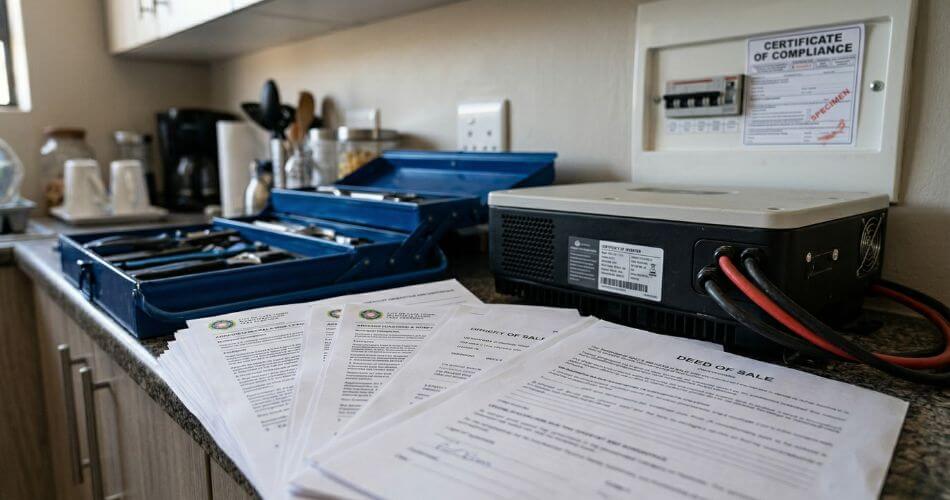
What is the new SSEG solar compliance crisis for Cape Town sellers?
The new SSEG solar compliance crisis for Cape Town sellers is a strict municipal law requiring all hard-wired inverters and solar panels to be officially registered and certified by an engineer before a property can be sold.
Years of national load shedding have forced homeowners to install alternative power systems. The municipality has now permanently ended the grace period for unauthorized installations.
If your backup power system is wired directly into your main electrical distribution board, it is legally classified as Small-Scale Embedded Generation (SSEG). You must have specialized hardware.
The city requires an inverter that meets the strict NRS 097-2-1 engineering standard. This specific standard forces the unit to disconnect during a blackout so it does not send lethal electricity back into the grid.
A standard electrical compliance certificate is no longer legally acceptable if you have a Cape Town solar compliance certificate for sellers outstanding. The hardware must be formally approved.
Can an unauthorized inverter stop my property transfer?
Yes, an unauthorized inverter will completely stop your property transfer because conveyancing attorneys cannot legally proceed without the specialized SANS 10142-1-2 solar electrical certificate.
The municipality is actively using aerial photography and smart meters to find illegal systems. If they detect an unregistered inverter, they will issue immediate administrative penalties exceeding R6,000.
Furthermore, the city holds the right to physically disconnect your home from the municipal grid entirely. Operating these illegal systems also severely compromises your household insurance.
If a fire occurs due to a faulty installation, your insurance provider will demand the official commissioning letter. Fixing a non-compliant solar setup must happen before you list the home.
If this issue surfaces during the conveyancing phase, the buyer will gain legal leverage to renegotiate the purchase price downward or cancel the deal entirely.
How do I pass the Schedule 4 water installation by-law?
You pass the Schedule 4 water installation by-law by hiring a City-registered plumber to inspect your geyser, water meter, and pipes to confirm there are no leaks or illegal greywater connections.
The municipality enforces this strict regulation to stop systemic water wastage across the province. A property cannot change hands without this official plumbing sign-off.
The inspector will execute seven mandated checks based on complex engineering regulations (SANS 10252 and 10254). They verify that the water meter stops completely when all taps are closed.
For older homes in the Northern Suburbs, this often exposes hidden problems like aging pipes leaking inside walls.
These sudden plumbing failures can trigger mandatory, unbudgeted repair costs before the plumber is legally permitted to issue the compliance paperwork.
You must clear these municipal hurdles early to keep the transaction moving quickly. Waiting until the last minute will stall your transfer for weeks.
Downsizing and Protecting Retirement Equity in Brackenfell

Why the 'property always goes up' mindset is dangerous in 2026
The mindset that property always goes up is dangerous in 2026 because high bank rates and massive maintenance costs are now eating away at your profit.
For thirty years, cheap home loans pushed house prices higher and higher. Those days of easy growth are effectively over.
Today, maintaining a large four-bedroom home in Brackenfell is expensive. You pay rising municipal rates, security fees, and constant repair bills for things like gutters, roofs, and geysers.
Holding onto a big family home can slowly chip away at your hard-earned cash. Selling now stops the financial bleed and turns your heavy physical bricks into usable money.
How can sellers use the R430,000 retirement annuity cap to save on tax?
Sellers can use the new R430,000 retirement annuity cap by asking a registered financial advisor to move a portion of their house profits into a retirement fund, which legally lowers their annual tax bill.
The latest national budget gave older property owners a massive advantage. The government increased the amount of money you can put into a retirement annuity tax-free from R350,000 to R430,000 per year.
Because I am a property strategist and not a registered financial advisor, I always tell my clients to take this specific number directly to their tax professional.
Moving a portion of your house sale profit into a retirement fund is a highly effective way to shield your money from the taxman. You just need a qualified planner to structure it correctly for your specific situation.
Capital gains tax rules were also updated in Budget 2026, with the primary residence exclusion increasing to R3,000,000, making this a favorable time to extract your money.
See the full breakdown in the FAQ section below.
Where should I invest my house sale proceeds to beat inflation?
You should invest your house sale proceeds into structured, low-risk funds that grow faster than the rising cost of everyday living to protect your purchasing power.
Getting the best price for your Brackenfell home is only half the work. Once the cash clears into your bank account, everyday inflation will slowly eat away at its buying power.
Five percent inflation simply means your money buys five percent less food and electricity next year. You cannot afford to leave your life savings sitting in a standard checking account.
You must place your funds into stable investments that beat the rising cost of living so your retirement cash remains intact.
My specific mandate is to extract your capital safely and rapidly from the property market so you have the liquid cash ready for your next chapter.
2026 Brackenfell Seller FAQ
How do I calculate capital gains tax when selling a house in Brackenfell?
Capital gains tax when selling a house in Brackenfell follows the same national SARS rules that apply anywhere in South Africa.
If the property is your primary residence, the first R3,000,000 of your capital gain is excluded, with only the amount above that added to your taxable income.
This is not a local Brackenfell rule, it is the Eighth Schedule to the Income Tax Act. For the 2027 tax year, every individual also gets a separate annual exclusion of R50,000.
Only 40 percent of whatever gain remains after both exclusions gets added to your taxable income, capping the maximum effective rate at 18 percent for individuals.
These figures increased under Budget 2026, the primary residence exclusion moved from R2 million to R3 million, and the annual exclusion from R40,000 to R50,000.
Always confirm your specific calculation with a registered tax practitioner before you list.
How do current fuel and interest rate costs affect Brackenfell buyer demand?
Fuel and interest rate costs are actively shrinking the buyer pool for Brackenfell sellers right now.
The SARB prime lending rate sits at 10.50 percent following the May 2026 hike, and fuel prices rose again from 2 September 2026 on continued Strait of Hormuz disruption.
Since March 2026, inland 95 petrol has climbed by R6.58 a litre and wholesale diesel by R10.75 a litre. Combined with the higher prime rate, banks are applying stricter affordability checks on every mortgage application.
This is why accurate, data-driven pricing from the first day of listing matters more in this market than it did a year ago.
Conclusion

Navigating the sale of a family home in late 2026 demands a firm grip on the numbers. Continued fuel cost increases and a higher prime lending rate are steadily narrowing the buyer pool.
At the same time, strict municipal bylaws act as roadblocks to a fast transfer. Speed, accurate pricing, and full compliance are your best tools in this economic climate.
By clearing your electrical and water certificates early, you convert your physical property into protected, liquid capital.
If you need precise guidance on how to sell my house in Brackenfell before the market shifts further, contact our advisory office to schedule a 2026 Equity Extraction and Compliance Audit.
We will map out your exact home value, flag any hidden municipal red tape, and structure a fast timeline to get your cash out safely.
About the Author
Andre Swart is the Brackenfell Real Estate Expert, a respected leader in the local market with over 20 years of results-driven experience. Through his platform, “Andre Swart Inspires,” he moves beyond simple property sales to share the mindset, strategies, and habits that build lasting success.
Grounded in integrity, Andre’s mission is to mentor the next generation of top agents and give homeowners the trusted guidance they deserve.