
How to Increase Property Value in Brackenfell and the Cape Town Northern Suburbs
How Brackenfell and Northern Suburbs homeowners can raise their home’s value in 2026: renovations that pay back, solar, water security and local development.

For many homeowners in Brackenfell, a house is not just a house. It is the result of years of work, and the biggest financial asset you own, which is exactly why learning how to increase property value in Cape Town Northern Suburbs matters so much here.
In this area, that is not sentiment; it is a suburb built by people who stayed and paid off their bonds, as
the numbers ahead will show.
So it is worth asking a plain question: what actually helps you increase property value in the Cape Town Northern Suburbs, and in Brackenfell specifically?
What actually moves that value up or down? Start with the part you cannot change. Your street and your suburb set the ceiling on what your home is worth.
What you do inside your own four walls decides how close you get to that ceiling, and how fast you get there. Both matter. This guide covers both, in the order that matters most to your wallet right now.
The 2026 Market Shift: What's Changed for Northern Suburbs Homeowners?

Several things have shifted in Brackenfell and the wider Northern Suburbs in 2026, and homeowners over sixty are asking about all of them.
The Reserve Bank has hiked the repo rate twice this year, taking prime to 10.75% and tightening what buyers can afford to offer.
Load shedding has stayed off for well over a year, but electricity tariffs rose sharply anyway, so the case for solar has changed shape rather than gone away.
Cape Town’s dam levels dropped hard early in the year before a partial winter recovery, putting water security back on buyers’ minds.
And the Jip de Jager Drive upgrade, long promised, is finished and already easing the commute for residents who use it. None of this is background noise. It is the market your home sits in today.
This guide starts with the renovations and upgrades that put real money in your pocket at resale, moves on to the electricity and water questions buyers are now asking, and finishes with the location factors and common mistakes that decide whether you get top price or leave money on the table.
The Controllables: Maximising Value Within Your Four Walls
The controllables are the things only you decide once you own a home: how well you maintain it, what you renovate, and how you present it when you sell.
You cannot move your street to a better suburb. You can decide whether your roof leaks, your kitchen dates the house, or your garden looks cared for. Those decisions add up.
The quality of local schools, the convenience of nearby shops, the condition of your neighbour’s garden, and the city’s plans for your area all create a framework of value that exists outside your front door.
Understanding these forces is the first step to positioning your property correctly in the market.
Maintenance as an Investment, Not an Expense
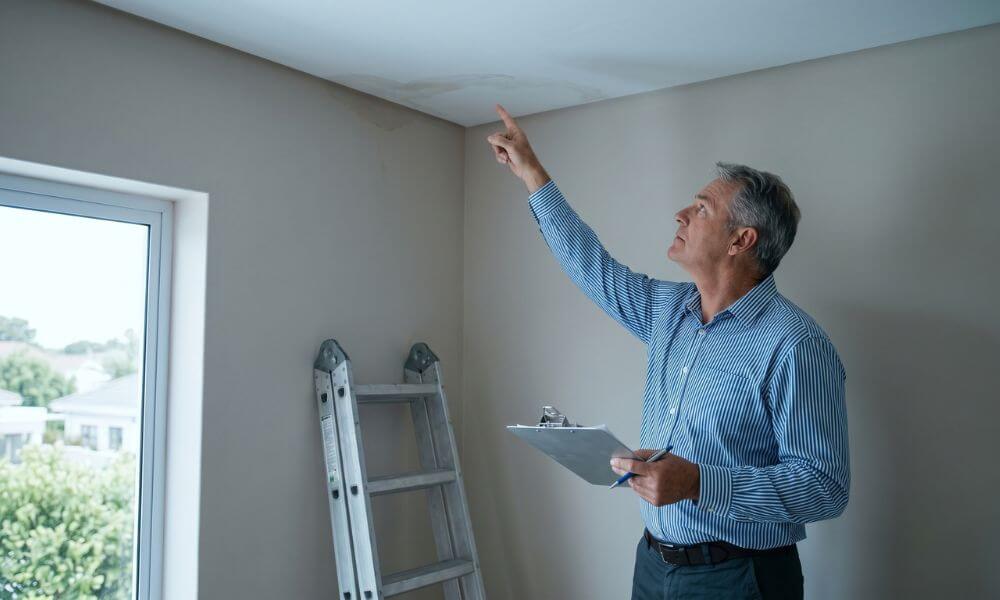
Skipping maintenance does not save you money. It only moves the cost further down the line, where it shows up as a lower offer, a difficult valuation, or a rejected insurance claim.
A small problem left alone rarely stays small. A minor roof leak becomes water damage, rot, and mould. By the time a buyer or a valuer sees it, it is no longer a R2,000 repair. It is a red flag that drags the whole offer down.
Insurance is where this catches people out. The National Financial Ombud Scheme’s 2024 annual report names gradual deterioration and lack of maintenance as the leading reason South African homeowner claims get rejected, and that category rose 7% year on year.
If a storm damages your roof and the insurer can show years of neglect behind it, you can be left covering
the repair yourself.
Put your maintenance budget where the risk actually sits: the roof, the gutters, the foundations, and the boundary walls.
Also Read: Downsizing your home in Brackenfell
Strategic Renovations With Proven Returns
Kitchens and bathrooms return more money at resale than any other renovation, and in 2026 a new category has joined them: energy and water independence.
A modern, well-planned kitchen is consistently the renovation buyers respond to first. A bathroom upgrade follows close behind, and adding an en-suite to the main bedroom is one of the highest-value single changes you can make. These are not new trends. What has changed is what sits alongside them.
BetterBond’s 2026 renovation guide, published in June, lists five categories that now consistently add the most value: energy and water independence, kitchen upgrades, bathroom renovations, curb appeal, and converting underused space into a functional room.
BetterBond’s national head of sales, Bradd Bendall, points to the same shift: load shedding and water supply issues have changed what South African buyers look for, and solar, inverters, gas conversions, and water storage are no longer nice-to-haves.
Buyers now treat them as essential infrastructure. For Brackenfell homeowners, that lines up directly with what we cover later in this guide on electricity and water.
One rule holds regardless of which renovation you choose: keep the quality consistent. A new kitchen next to worn flooring does not look like progress; it looks unfinished, and it draws attention to everything you haven’t fixed yet.
Poor DIY work has the same effect: it tells a buyer that other jobs in the house may have been handled just as carelessly. Unless you are genuinely skilled at the work, pay a professional to do it properly.
And remember the ceiling we mentioned at the start. No renovation pushes your home’s price past what your street and your suburb allow.
Spend past that ceiling, and you are not adding value; you are giving money away.
Future-Proofing Your Asset: The New Economics of Electricity and Water

Solar and the New Economics of Electricity
Solar in Brackenfell today earns its keep by cutting a rising bill, not by avoiding a blackout.
South Africa has been without load shedding since 16 May 2025, and Eskom’s improved performance had extended that run to 441 consecutive days by early August 2026.
For the moment, the blackout argument for solar is off the table.
What has not paused is the cost of electricity itself. NERSA approved an 8.76% tariff increase for Eskom’s direct customers from 1 April 2026, and 9.01% for municipal customers from 1 July 2026.
Cape Town’s own Home User tariff, the one that applies to most Brackenfell properties, rose in line with that: the Block 1 energy rate went from R3.3766 to R3.5595 per kWh, and the fixed monthly service charge rose from R390.87 to R424.30.
Part of that increase corrects a R54.7 billion error NERSA made in calculating Eskom’s asset base, being recovered from customers over the next three years. None of this is a one-off. It is the new baseline.
Eskom’s own Medium-Term System Adequacy Outlook, published in October 2025, adds a longer-term reason to keep solar on the table.
It flags a high likelihood of load shedding returning in 2029 and 2030, when 8.74 GW of coal capacity is due to retire, and Eskom’s own coal fleet shrinks from 40.1 GW to 31.7 GW.
Whether that risk actually lands depends on whether new gas and renewable capacity comes online on time, so it is a real but conditional warning, not a certainty.
The honest case for solar in Brackenfell today rests on protecting against tariffs that keep climbing every year, with a longer-term backstop against 2029 and 2030 as a second reason, not the main one.
A home with solar already installed still reads to buyers as modern and prepared, whichever argument moves them.
Water Security Is Back in the Spotlight
Cape Town’s water security became a live concern again in 2026, after several years when it had faded into the background.
Combined dam levels fell to between 47% and 55% between February and April, roughly 18 to 20% lower than the same period in 2025, and the City placed itself in an “Early Drought Caution” phase for much of the year.
Winter rain brought a partial recovery, with levels reaching 78.1% by early August, but that figure still sat 6.7% below the same week the year before, and the gap has since widened rather than closed.
The City has said it will reassess the position ahead of its Annual Operating Analysis with the national Department of Water and Sanitation, typically held in November, before deciding whether formal restrictions are needed.
For Brackenfell homeowners, this makes a rainwater tank or a greywater system a genuinely current selling point again, not a throwback to the “Day Zero” years.
Buyers who lived through the dry stretch earlier this year are paying attention to a home that needs less from the municipal supply.
Green Living and Fibre: The Other Boxes Buyers Check

Buyers increasingly look for a home that costs less to run, and a water-wise garden is now part of that picture.
Indigenous, low-maintenance planting cuts both the water bill and the weekend spent on upkeep, and a well-kept vegetable or herb patch reads as a genuine feature rather than a hobby.
Fast, reliable fibre has also become a baseline expectation. Advertising a home as fibre-ready is now a standard line in a competitive listing, not a bonus.
When you list, say it plainly: “This home offers uninterrupted power,” or “This home reduces its need for municipal water.”
That speaks directly to what a 2026 buyer is actually worried about, and it can justify asking a firmer price.
The Perils of Personalisation: Making Your Home Market-Ready
Making a home market-ready means stripping out the personal touches that suit you and replacing them with a look that suits almost anyone.
Your home reflects your life, and that is exactly right while you live there. The moment you decide to sell, the goal changes. A buyer needs to picture their own life in the space, not yours.
The Psychology of Colour and Buyer Perception
Buyers respond better to neutral colours because a neutral room takes no extra imagination or effort to move into.
Whites, beiges, and soft greys work like a blank page. A buyer can add their own furniture and their own life to it without doing anything first.
A bold feature wall works against you, even if you love it. A buyer sees it and immediately starts adding up the time and cost of repainting it, and people are bad at that sum.
They almost always guess higher than the real cost, and that guess quietly lowers what they are prepared to offer.
Repainting in neutral tones before you list removes that guesswork, and the guesswork is what costs you money, not the paint itself.
Lifestyle-Specific Customisations That Can Deter Buyers
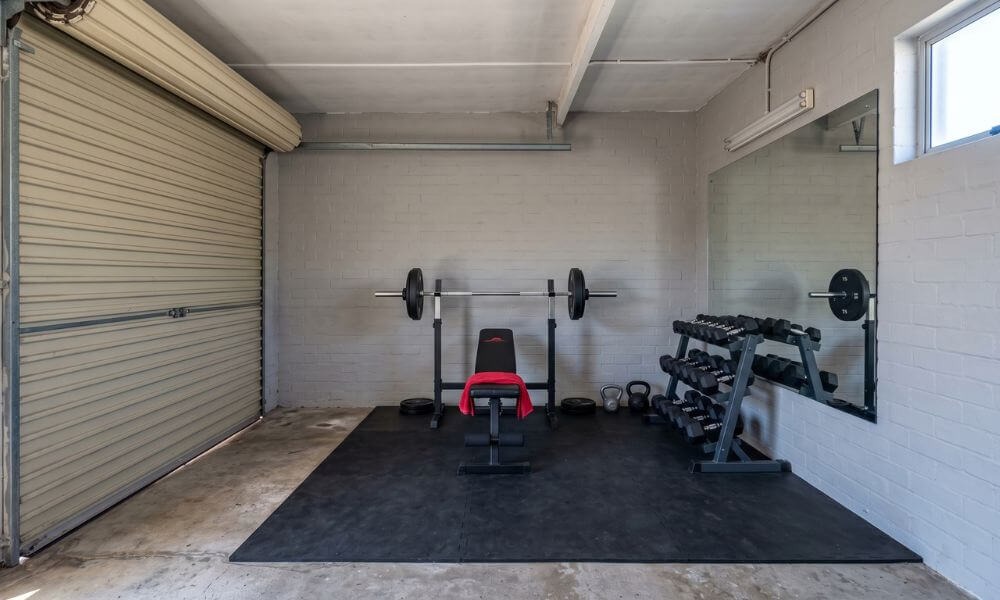
Converting a garage into a home gym or giving up a bedroom for a walk-in closet takes away something most buyers need in exchange for something only you wanted.
Secure parking and a full set of bedrooms are basics most buyers are counting on. If you have made changes like these, work out how to reverse them before you list, or be ready for buyers to mentally subtract the cost of undoing them.
The same goes for niche luxury features that do not fit the neighbourhood.
A wine cellar is a fine addition in the right suburb. In a modest family suburb, it rarely earns back what it cost, because the buyers looking in that price range are not shopping for a wine cellar.
High-Impact, Low-Cost Improvements for Brackenfell Homes
You do not need a full renovation to change how a home shows. A handful of small, cheap fixes can lift a buyer’s first impression more than their cost suggests.
A fresh coat of neutral exterior paint is one of the most cost-effective improvements available to you, and it is usually the first thing a buyer sees before they even walk through the door.
Swapping out dated cabinet handles and doorknobs makes a kitchen or bathroom feel modern in an afternoon. Replacing old light fixtures with energy-efficient LEDs makes rooms feel brighter and larger without touching a wall.
- Repaint the exterior in neutral tones.
- Replace dated cabinet hardware and light fixtures Refresh bathroom taps, mirrors, and toilet seats.
- Tidy the garden and clear weeds from paving Add a few pots of colourful flowers near the entrance.
None of this costs much. All of it changes the first ten seconds a buyer spends on your property, and that first impression sets the tone for everything they think about the price.
The Unshakeable Foundation: Why Location Still Governs Your Brackenfell Home's Value
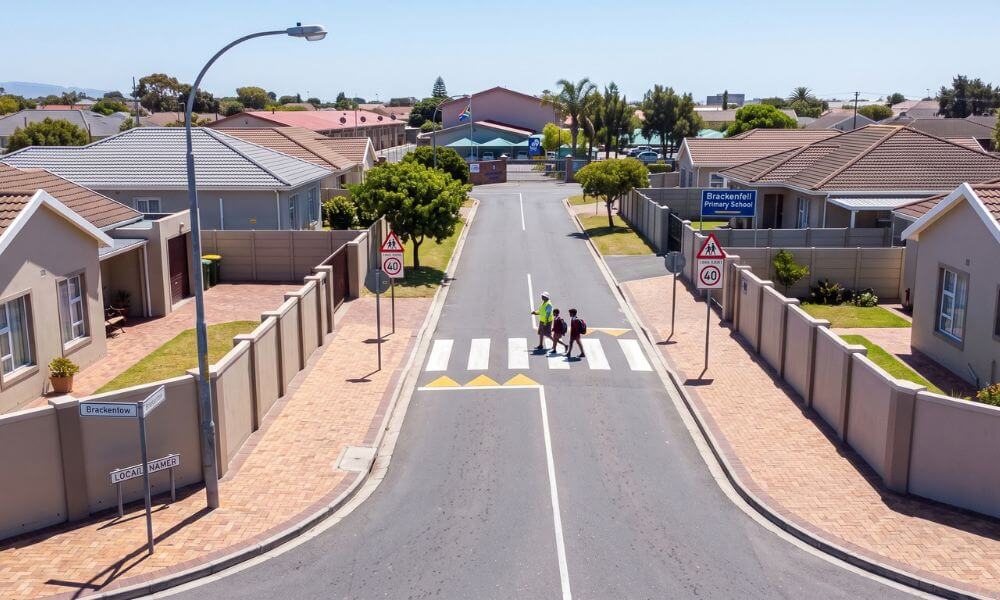
Location sets the ceiling on what your home is worth, because buyers are paying for the street and the suburb as much as for the house itself.
Before you think about paint colours or kitchen countertops, this is the factor that decides how high your ceiling sits.
The quality of local schools, how close you are to shops, how well your neighbour keeps their garden, and what the City has planned for your area all sit outside your front door, and all of it shapes what a buyer is willing to pay.
The Power of Proximity: How Location Helps You Increase Property Value in Cape Town Northern Suburbs
Brackenfell has grown into one of the Northern Suburbs’ steadiest performers, and Lightstone data backs that up.
Freehold median values rose from R875,000 in 2016 to R2,360,000 in 2026, a rise of roughly 170% over ten years, with R660,000 of that gain landing in just the last five years.
- 2016 Freehold Median Value: R875,000
- 2026 Freehold Median Value: R2,360,000
- 10-Year Growth: 170% (R1,485,000 increase)
Set against its neighbours, Brackenfell holds its own without pretending to be something it isn’t.
The table below uses Lightstone’s median valuation, a separate measure from the sale-price trend above, so read the two as complementary rather than contradictory:
Source: Lightstone Town Report, City of Cape Town, 25 September 2026.
| Town | Median Valuation (2026) |
|---|---|
| Durbanville | R3,550,000 |
| Stellenbosch | R2,850,000 |
| Bellville | R2,800,000 |
| Goodwood | R2,450,000 |
| Brackenfell | R2,000,000 |
| Kuilsrivier | R1,750,000 |
| Kraaifontein | R1,100,000 |
The suburb’s 30,183 residential properties split roughly 78% freehold to 22% sectional title, a mix that has stayed stable even as prices climbed.
Brackenfell also ranks 90th out of 851 towns nationally on freehold median valuation, and 103rd out of 347 on sectional title.
Over the last 12 months, 1,314 repeat sales changed hands at an average of R1,762,300, a steady, healthy volume for a suburb this size.
This is also a suburb people settle into and stay. 55% of current owners have held their property for 11 years or more, and owners over 65 make up close to a quarter of all owners in the area.
Forced, distressed sales have never climbed back above 17 in any year since 2017, against a 2010 peak of 152. That is a market that has worked through its old stress, not one still carrying it.
Some of this is structural. Brackenfell sits close to the N1 and R300, giving residents a direct run to Cape Town, Stellenbosch, and Somerset West without the longer commutes found further out.
The area also carries some of the Western Cape’s more sought-after schools, including Bastion Primary in Protea Heights, which Tygerburger reports is the biggest school in the province by enrolment.
That popularity cuts both ways: places are in high demand and often full, so a buyer with young children should confirm placement rather than assume it.
Cape Gate Mediclinic and the Cape Gate shopping centre sit in the same radius, and Brackenfell borders the start of the Stellenbosch Wine Route.
Also Read: Brackenfell property market trends for 2026
Checking What's Coming: Zoning and Development Tools

You can check what is planned for your street yourself, using two free City tools. The “City Map and Zoning Viewer” shows what is legally permitted to be built on your property and those around you.
The “Development Application Management System” (DAMS) portal lets you track building or land-use applications submitted in your area, and the City must run a public participation process before approving anything significant, giving you a formal chance to respond.
This matters in Brackenfell right now, not just in theory.
A 2026 petition backed by a survey of 4,280 motorists, residents, and business owners found that 78.1% described congestion at the Brackenfell Boulevard bridge as serious or extremely serious, and the Northern District Community Forum has asked the City to tie further development approvals to road upgrades.
Whatever comes of it, it is exactly the kind of local development story that shows up first in DAMS and local reporting, not in a sales brochure.
Knowing what is coming, and when, lets you decide whether to object, sell, or hold with full information, rather than finding out from a neighbour after the fact.
The Neighbourhood Effect: Curb Appeal by Proxy
Curb appeal by proxy means your neighbours’ upkeep affects your home’s value, not just your own. Buyers do not judge a house on its own. They judge it as part of the street it sits on.
A tidy, well-kept street tells a buyer this is a safe, stable place to live. Under that logic, a neighbour who keeps their property in good order is quietly adding to your home’s value. A neighbour’s overgrown garden or crumbling outbuilding takes value away, just as quietly.
Some of the risk is physical, not just visual. A lapa built too close to a boundary line raises fire risk. An overloaded boundary wall can collapse, and the damage may not be covered by your insurance.
Even a fully legal, council-approved build next door can cost you value by blocking your sunlight or your view, and there is often little you can do about it once approved.
Avoiding the Pitfalls: Common Selling Mistakes for Long-Term Brackenfell Homeowners
The most damaging mistake in selling a long-held home is pricing it on emotion instead of the market. It is an easy mistake to make, and it is a costly one.
MyProperty’s 2025 Sentiment Index found that over 75% of South African homes sell below their asking price, and 88% of agents say they regularly encounter overpriced listings.
An overpriced home does not sit and wait patiently for the right buyer. It sits, buyers lose interest, and it usually ends up selling for less than a fair price would have achieved from day one.
There is a real reason owners overprice, and it has a name. In 1990, economists Daniel Kahneman, Jack Knetsch, and Richard Thaler, later a Nobel Prize winner, ran an experiment at Cornell University.
Students were given a coffee mug at random. The owners then set a price to sell it, and other students set a price to buy an identical mug. The sellers consistently asked for roughly double what the buyers offered, for the exact same object.
Owning something changes how much you think it is worth. After years in a home, raising a family and doing the work to maintain it, that effect is stronger, not weaker. It is a normal response. It is also not something a buyer shares or pays for.
Pricing accuracy matters even more now that borrowing has tightened twice in one year. The Reserve Bank raised the repo rate on 28 May 2026, from 6.75% to 7.00%, and again on 23 September 2026, to 7.25%, taking prime to 10.75%.
On a R2.5 million bond, close to Brackenfell’s own median home price, that second hike alone adds roughly R421 to the monthly repayment. Buyers have less room to stretch to meet an inflated asking price than they did a year ago, which makes a correctly priced home even more likely to stand out.
Choosing the wrong agent compounds the problem, particularly one who quotes an inflated valuation just to win your listing. A good agent backs their recommended price with a proper market analysis, not a number chosen to flatter you into signing.
Finally, do not ignore legal and building compliance. Alterations made over the years without approved municipal plans can lead a bank to refuse finance for your buyer at the last minute, so get your paperwork in order before you list, not after an offer falls through.
Your home is one of the biggest things you own, and you decide how well it is looked after between now and the day you sell.
Understand the market you are in, make the improvements that actually pay back, and price the home for what it is worth to a stranger, not to you.
That is how you sell with confidence, and how you increase property value in Cape Town Northern Suburbs for what it is actually worth.
If you are ready to take the next step, a personal consultation can give you a clear, tailored strategy for your Brackenfell property.
Also Read: How to accurately value a house in Brackenfell Cape Town.