
Surviving The Real Estate January Void.
The Great Erasure: Why January Feels Like a Career Crisis (and How to Reclaim Your Game)
The phone is silent, the deals are dead, and the ‘Show Pony’ feed is a lie. Here is your psychological map through the January Void.
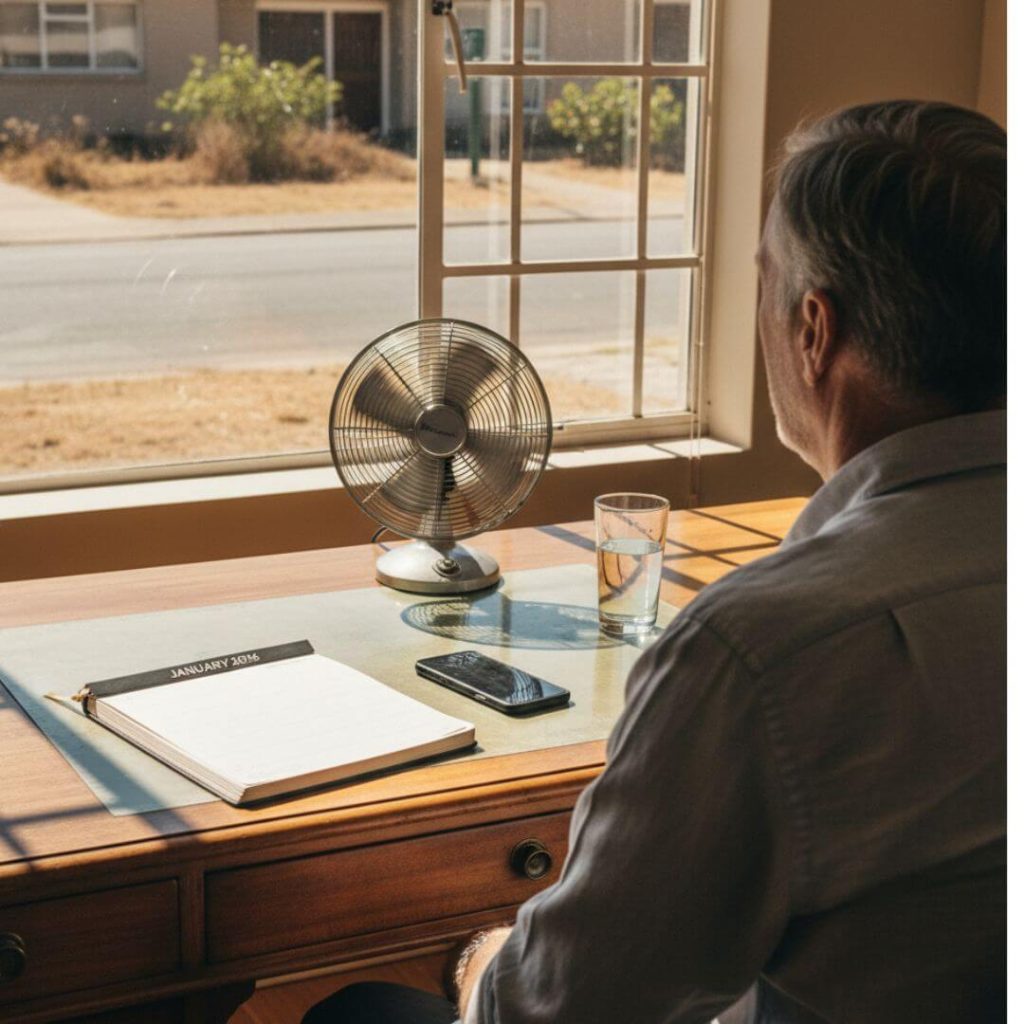
Good morning, colleague. Pull up a chair. I know why you are here. It is January, 2026, and the sun is beating down on the Northern Suburbs.
You are sitting in your office in Bellville or maybe at a kitchen table in Brackenfell, staring at a phone that refuses to ring. The excitement of the December holidays has evaporated, leaving behind a cold, hollow feeling in your chest.
You look at your empty calendar and wonder if you ever actually knew how to sell a house. This is the silence I know well. It is a time when your previous success feels like a dream, and your future looks like a blank page.
You are currently surviving the real estate January void, and I want you to know that you are not alone in this struggle.
The January Void: Navigating the Great Erasure

The Dopamine Crash: Why the Silence of the Phone Physically Hurts
Real estate is not just a job; it is a high-speed chase that feeds your brain. For eleven months of the year, you live on a diet of adrenaline and rewards. Every time you sign a new mandate or get an Offer to Purchase (OTP), your brain gets a hit of dopamine.
You are a hunter, and the hunt keeps you awake and moving. In the Northern Suburbs, where the market moves fast, you have become addicted to this feeling of winning. It keeps you going through the long hours and the difficult clients.
When January arrives, that supply of “feel-good” chemicals stops. The market in Cape Town slows down as people recover from their break. This is not just a quiet time; it is a physical crash. Your body is used to the stress and the rush of the deal.
When the phone goes silent, your system does not know how to handle the peace. You feel tired, grumpy, and lost. You might think you are suffering from overcoming real estate agent burnout, but it is actually a withdrawal. Your brain is begging for a “win” that the current market cannot give you yet.
This silence feels like a threat to your life. In our world, a quiet phone is the sound of no money coming in. You check your email every five minutes. You look at your signal bars to make sure your phone is still working.
You are waiting for a sound that validates your worth, but the void remains. This is the hardest part of the start of the year. You have to learn how to exist without the constant noise of the deal.
Resetting to Zero: Confronting the Annual Crisis of Competence
For most people in South Africa, January is just a return to the office. Their salary is there, and their job is the same. For us, January 1st is a total wipe of the scoreboard. It does not matter if you were the top agent in Sonstraal or Protea Heights in 2025.
Today, you have zero sales. You have zero active leads. The awards on your wall feel like they belong to someone else. This is the “Great Erasure,” and it can lead to a heavy case of imposter syndrome for property practitioners.
You start to ask yourself hard questions. You wonder if your success last year was just luck. You look at the empty lead pipeline and feel like a fraud who has finally been caught out. This crisis of competence happens every year, yet it feels new every time.
The blank calendar is a mirror that reflects your deepest fears. You feel like you have been stripped of your armor and sent back to your first day in the industry. It is a psychological weight that makes every small task feel like climbing a mountain.
The Skinner Box Effect: Maintaining Persistence Without Reinforcement
In psychology, there is a concept called the Skinner Box. It is a cage where a subject presses a lever to get a reward. If the reward comes every time, the subject works steadily. But the strongest way to trap someone is to give the reward only sometimes.
This is exactly how real estate works. You make calls, you go to viewings, and sometimes you get a sale. This keeps you hooked. But in January 2026, the ratio of work to reward broke.
You are pressing the lever harder than ever. You are calling your old database and sending out flyers in Kraaifontein. But the “pellet” of a signed deal is not appearing. This leads to a state called “Learned Helplessness.”
You begin to think that your effort does not matter. You feel like you are shouting into a dark room, and no one is listening. This is the point where many agents give up. They stop calling. They stop showing up. They let the void win because they cannot handle the lack of feedback.
Gloss vs. Grit: The Show Pony Trap in the Northern Suburbs
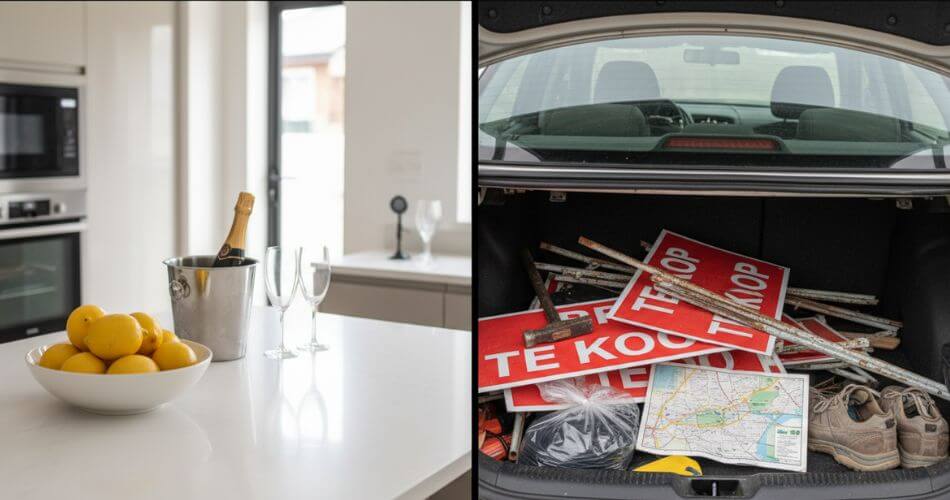
The Performance of Success: Why the Digital Highlight Reel is a Lie
We live in a culture of “Show Ponies.” You see them on your social media feed every day. They are posting videos of themselves in front of “Sold” signs in Durbanville. They are wearing expensive suits and driving new cars.
They make it look like they are winning even when the rest of the world is quiet. This performance of success is a trap that creates a fake reality. It forces you to compare your internal mess with their polished outside.
The truth is that many of those “Sold” posts are old or represent deals that are struggling to register. Behind the scenes, many of these agents are facing the same “Januworry” as everyone else. They are performing for the algorithm because they are scared that if they stop, they will disappear.
This digital lie makes you feel like you are the only one failing. It keeps you from being honest with your colleagues and your family about how hard things really are.
The Brackenfell Reality: Navigating the Middle-Class Affordability Squeeze
In the middle-market areas like Brackenfell, we see the real world. We are not selling luxury mansions to foreign buyers. We are selling homes to families who work hard for every cent. In January 2026, these families are feeling the long-term effects of the last two years.
While interest rates have finally started to ease to 10.25%, the cost of living remains a heavy weight. These buyers are not just cautious; they are precise. They are calculating every cent of their debt before they make a move. This is the “Grit” of our market.
You are standing in a house in a good street, but the pace has changed. The buyers are there, but they are taking much longer to commit. When an offer does arrive, it often reflects a buyer’s actual bank limit rather than the seller’s high expectations.
You have to explain to a seller why their home is sitting on the market longer than it would have during the high-demand period of the early 2020s.
Sellers are often stuck on a “magic number” they heard a neighbor got a few years ago, while you have to help them face the 2026 reality of a price-sensitive public. This is not about prices falling; it is about the market finding its balance after the post-2024 rate hikes.
This is not a glamorous video for Instagram. This is a difficult conversation at a kitchen table about patience and realistic timing. The “Show Pony” world does not talk about the reality of the middle-class struggle, but this is where the real work happens.
Cognitive Dissonance: When Your Instagram Feed Doesn't Match Your Bank Account
This creates a deep pain called cognitive dissonance. It is the gap between the person you pretend to be and the person you are. You might be posting about “hustle” while you are worried about paying your child’s school fees.
You are trying to look like a success while your bank account is empty. This is a heavy burden to carry. It makes you feel like a liar, which drains your energy even more.
The industry tells you to “fake it until you make it.” But in the Northern Suburbs, people can smell a fake. When you try to force a glamorous image onto a practical market, it feels wrong. This conflict makes you dread your work.
You feel like you are playing a role instead of doing a job. The path to sanity is to stop the performance and start being real about the challenges we face in this economy.
The Road of Trials: Processing the Grief of the Collapsed Deal

The Bond Rejection Ordeal: When the 'Computer Says No' to the Dream
There is no pain quite like dealing with property deal collapse stress. You have worked for weeks to find the buyer. You have negotiated the price. The OTP is signed. You have already started to calculate your commission.
Then, the call comes from the bond originator. The bank has declined the loan. In 2026, the banks are stricter than ever. They see the holiday credit card debt and they say no.
This is a “Road of Trials” that has no clear end. When a deal dies because of a bond rejection, it feels like a personal failure. You have to tell the seller that the “sold” sign has to come down. You have to tell the buyer that their dream of a new home is over.
This is a form of grief. You have lost the money, but you have also lost the story of success you were building. It is a blow to your spirit that makes you want to hide under the covers.
The Bearer of Bad News: Managing Vicarious Trauma and Client Despair
As an agent, you are the person who has to deliver the blow. You are the one who tells a family that they cannot move. You absorb their anger, their tears, and their frustration. This is emotional labor that no one pays you for.
Over time, this creates “Vicarious Trauma.” You start to carry the sadness of your clients. You become the person who ruins people’s days, and that is a hard role to play.
You might find yourself avoiding the phone because you are scared of more bad news. You start to expect the worst. This is a protective shield you build around your heart, but it also stops you from being a good agent.
You have to learn how to hear “no” without letting it break you. You are the buffer between the cold logic of the bank and the warm hopes of the family. It is a heavy job, and it is okay to admit that it hurts.
The Invisible Labor: How Late-Night Admin and Compliance Fatigue Erode Sanity
Then there is the work that no one sees. The late-night admin. The FICA documents. The chasing of rates, clearances, and beetle certificates. In January, when you are already tired, this “Invisible Labor” feels like a mountain.
You are working until 11 PM on paperwork for a deal that might not even go through. This is the unglamorous side of real estate that the “Show Ponies” never show.
This work is vital, but it is also exhausting. It keeps you from resting, and it keeps you from your family. In 2026, the compliance rules are even more complex. One missing document can stop a transfer. The fear of making a mistake keeps you awake.
This fatigue builds up until you feel like you are drowning in paper. It is a slow drain on your sanity that makes the January void feel even darker.
Finding Your Own Game: The Path for the Authentic Agent

From Volume to Value: Building a Client Garden Instead of Hunting
So, how do we fix this? The answer is to change how you measure your worth. Stop chasing “Volume”—the high numbers and the boards. Start looking for “Value.” Think of your business as a garden instead of a hunt.
A hunter only eats when they kill something. A gardener builds something that grows over time. In January, the gardener is not harvesting; they are preparing the soil.
This means using the quiet time to check in on people. Not to ask for a mandate, but to see how they are doing. It means giving away your knowledge for free to help someone understand their property value.
When you focus on value, the silence of January is not a failure. It is just a season for planting. This shift is the key to finding purpose in the property market beyond just the next paycheck.
Relational Selling: Anchoring Your Worth in Community Trust, Not Leaderboards
The “Authentic Agent” does not care about the company leaderboard. They care about their name in the community. In places like Brackenfell and Bellville, word of mouth is everything.
If you help a family through a difficult time—even if the deal fails—they will remember you. They will tell their friends that you were honest and kind. This is “Relational Selling.”
When your worth is tied to trust, the January void loses its power. You know that you are a good agent because people respect you, not because you have five sales this month. This trust is your real bank account.
It is what will keep you in business for twenty years while the “Show Ponies” burn out and leave. You are a pillar of the community, not just a person who sells houses.
Surviving the Silence: A Manifesto for Sanity and Lasting Resilience

To survive the silence, you must be kind to yourself. Use this time to fix your systems. Get your admin in order. Take a walk in the Durbanville hills.
Remind yourself that you are more than your commission. Use authentic real estate marketing tips that focus on real stories and real people. Stop trying to look perfect and start trying to be helpful.
The market will turn. The phone will start ringing again in February. But until then, stand tall. You have survived every other January, and you will survive this one too.
You are part of a group of professionals who keep this country moving. Your work matters, even when it is quiet. The void is not a hole you are falling into; it is a space where you can find your real self again.
As you move through these coming weeks, remember that the “Show Pony” feed is just a performance. Your grit and your honesty are what actually count. Take this time to breathe, to plan, and to reconnect with why you started this job in the first place.
You are not a fraud, and you are not broken. You are just a practitioner in a quiet season. Keep your head up, keep your heart open, and keep your feet on the ground. We are all in this together, and the work you do in the dark will eventually lead to the light.
You are surviving the real estate January void by being the most real version of yourself, and that is the only way to truly win.
About the Author
Andre Swart is a respected leader in Brackenfell real estate with over 20 years of results-driven experience. Through his platform, “Andre Swart Inspires,” he moves beyond simple property sales to share the proven mindset, strategies, and habits that build lasting success.
Grounded in integrity, Andre’s mission is to mentor the next generation of top agents and provide homeowners with the trusted guidance they deserve.